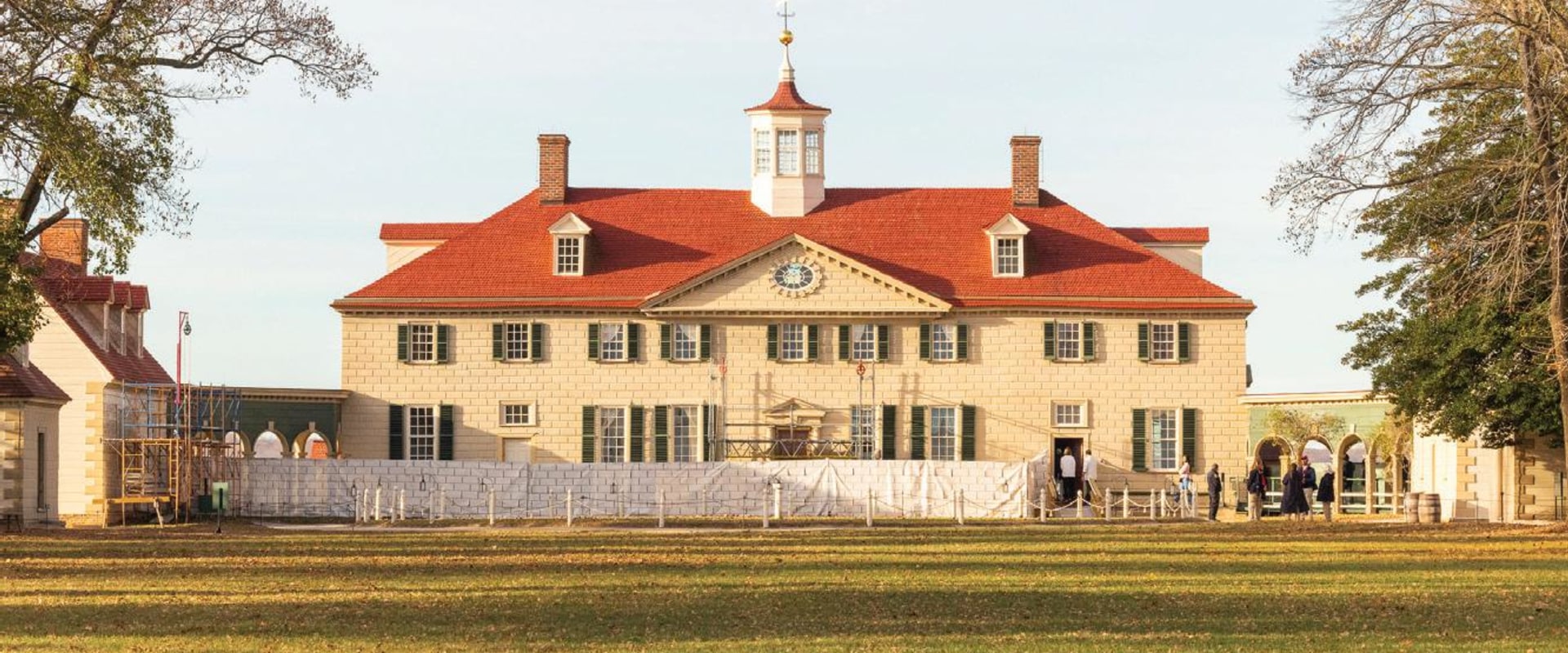
Mount Vernon, the iconic estate of George Washington, stands as a testament to the life and legacy of the first President of the United States. Nestled along the banks of the Potomac River in Virginia, this historic site is not only a symbol of American heritage but also a reflection of the nation’s early years. The estate, which was originally established in the 18th century, has been meticulously preserved with careful project management and design services, serving as a museum that attracts millions of visitors each year. Its Mount Vernon, the iconic estate of George Washington, stands as a testament to the life and legacy of the first President of the United States. Nestled along the banks of the Potomac River in Virginia, this historic site is not only a symbol of American heritage but also a reflection of the nation’s early years. The estate, which was originally established in the 18th century, has been meticulously preserved with careful project management and design services, serving as a museum that attracts millions of visitors each year. Its historical significance extends beyond its picturesque views; it embodies the values and struggles of a young nation. The history of Mount Vernon is rich and multifaceted, encompassing Washington's personal life, his role in the American Revolution, and his vision for the country.
The estate features beautifully restored buildings, gardens, and artifacts that provide insight into Washington's life and the era in which he lived. As visitors stroll through the grounds, they can appreciate not only the architectural beauty but also the stories that shaped America’s founding. Today, Mount Vernon remains relevant as a center for education and historical preservation. It serves as a reminder of the principles upon which the United States was founded and continues to inspire discussions about leadership, governance, and civic responsibility. Understanding who controls Mount Vernon is essential for grasping how this cherished landmark is maintained and celebrated in contemporary society.
Historical Background of Mount Vernon
Mount Vernon, the iconic estate of George Washington, is steeped in rich history that dates back to its establishment in the 18th century.Originally built in 1735 by Washington's father, Augustine Washington, the estate was named after Admiral Edward Vernon, a British naval officer. However, it was George Washington who transformed Mount Vernon into a symbol of American heritage.After inheriting the estate in 1754, Washington expanded the property significantly. He undertook extensive renovations and improvements, turning it into a grand plantation that reflected his status and vision. By the time of his presidency, Mount Vernon had grown to encompass over 8,000 acres, featuring beautifully landscaped gardens, a distillery, and a gristmill.Throughout its history, Mount Vernon has served various roles.
It was not only Washington's home but also a center for agricultural innovation. Washington implemented advanced farming techniques and crop rotation methods that were ahead of his time. This commitment to agriculture and sustainability laid the groundwork for future generations.Following Washington's death in 1799, the estate faced challenges regarding its preservation. The property was inherited by his step-grandson, who struggled to maintain it financially.
In 1858, the Mount Vernon Ladies' Association was formed to save the estate from deterioration. This organization played a crucial role in restoring and preserving Mount Vernon as a historic site.Today, Mount Vernon stands as a testament to Washington's legacy and is managed by the Mount Vernon Ladies' Association, which continues to uphold its historical significance. The estate attracts millions of visitors each year who come to learn about Washington's life and contributions to American history.
Current Ownership and Management Structure
The Mount Vernon estate, the historic home of George Washington, is currently owned and managed by the Mount Vernon Ladies' Association (MVLA), a private, non-profit organization. Established in 1853, the MVLA was formed with the mission to preserve and protect the estate for future generations.This organization is unique as it is the first historic preservation organization in the United States, and it has played a crucial role in maintaining the integrity of Mount Vernon.The management structure of Mount Vernon is overseen by a board of regents, which consists of a diverse group of individuals dedicated to the estate's mission. The board is responsible for setting policies, overseeing financial management, and ensuring that the estate remains a valuable educational resource. The current president of the MVLA leads this board and plays a pivotal role in strategic planning and community engagement.In addition to the board, there are various departments within the MVLA that handle specific aspects of estate management:
- Curatorial Department: Responsible for the preservation and interpretation of artifacts and historical documents related to George Washington.
- Education Department: Focuses on developing programs and resources for visitors, including school groups and special events.
- Visitor Services: Manages guest experiences, ensuring that all visitors receive informative and engaging tours.
- Conservation Team: Works on maintaining the physical structures and landscapes of the estate to uphold its historical significance.
The Role of the Mount Vernon Ladies' Association
The Mount Vernon Ladies' Association (MVLA) has played a pivotal role in the preservation and management of George Washington's estate since its founding in 1853. Established by a group of determined women, the MVLA was formed with the primary goal of saving Mount Vernon from neglect and deterioration.Their efforts have not only safeguarded the physical structure of the estate but have also ensured that Washington's legacy is honored and remembered.One of the most significant contributions of the MVLA has been their commitment to preservation efforts. The association undertook extensive restoration projects, including the meticulous repair of the mansion, gardens, and outbuildings. These initiatives have been guided by historical research and a deep respect for authenticity, ensuring that visitors experience Mount Vernon as closely as possible to how it was during Washington's time.Today, the MVLA continues to influence the management of Mount Vernon through various programs and initiatives:
- Educational Programs: The association offers a range of educational programs aimed at teaching visitors about Washington's life, his contributions to American history, and the importance of preserving historical sites.
- Community Engagement: The MVLA actively engages with the community through events, volunteer opportunities, and partnerships with local organizations to promote awareness and appreciation for Mount Vernon.
- Fundraising Efforts: To support ongoing preservation projects, the MVLA organizes fundraising campaigns and events that encourage public involvement and investment in Mount Vernon's future.
Government Involvement and Regulations
The management of Mount Vernon, the historic estate of George Washington, is significantly influenced by government regulations and federal involvement.As a site of national importance, it is subject to various laws and guidelines aimed at preserving its historical integrity and ensuring its accessibility to the public.One of the primary federal regulations affecting Mount Vernon is the National Historic Preservation Act (NHPA) of 1966. This act encourages the preservation of historical sites across the United States and mandates that federal agencies consider the effects of their actions on historic properties. Although Mount Vernon is privately owned by the Mount Vernon Ladies' Association, it still benefits from the protections offered under this act, which helps maintain its historical significance.Additionally, the National Park Service (NPS) plays a crucial role in providing guidance and support for preservation efforts. While Mount Vernon is not a national park, the NPS collaborates with the estate to ensure that preservation practices align with federal standards. This partnership helps in securing funding and resources for restoration projects and educational programs.Moreover, local and state regulations also come into play.
The estate must comply with zoning laws and building codes that govern land use and construction in Virginia. These regulations are designed to protect not only the estate itself but also the surrounding environment and community.In summary, Mount Vernon's management is shaped by a complex interplay of federal involvement, preservation laws, and local regulations. This framework ensures that the estate remains a vital part of American history while adapting to contemporary needs.
Visitor Experience and Community Engagement
Mount Vernon, the historic estate of George Washington, is not just a museum; it is a vibrant hub for visitor engagement and community events. The management of Mount Vernon actively seeks to create an enriching experience for all who visit, ensuring that the legacy of Washington is accessible and engaging for diverse audiences.One of the key ways Mount Vernon fosters community engagement is through a variety of educational programs.These programs are designed to cater to different age groups and interests, from school field trips that delve into American history to workshops that explore 18th-century crafts and skills. Visitors can participate in hands-on activities that bring history to life, making their experience both informative and memorable.In addition to educational offerings, Mount Vernon hosts numerous community events throughout the year. These events include:
- Seasonal Festivals: Celebrating holidays and seasonal changes with themed activities, food, and entertainment.
- Historical Reenactments: Engaging performances that depict life during Washington's time, allowing visitors to witness history firsthand.
- Lecture Series: Featuring historians and experts who discuss various aspects of Washington's life and the founding of the United States.
This commitment not only preserves the legacy of George Washington but also fosters a sense of belonging among those who visit.
Challenges Facing Mount Vernon's Management
Managing Mount Vernon, the historic estate of George Washington, presents a myriad of challenges that threaten its preservation and operational sustainability. One of the most pressing issues is funding. As a privately owned site, Mount Vernon relies heavily on donations, ticket sales, and membership fees to maintain its facilities and programs. However, fluctuations in visitor numbers, particularly during economic downturns or global events like the COVID-19 pandemic, can significantly impact revenue streams.In addition to financial constraints, the preservation challenges at Mount Vernon are substantial.The estate encompasses numerous historic buildings and artifacts that require constant upkeep to prevent deterioration. For instance, the main mansion itself is over 200 years old and faces threats from environmental factors such as humidity and temperature fluctuations. The management team must prioritize restoration projects while balancing the need for modern amenities that enhance visitor experience.Moreover, there is an ongoing challenge in balancing historical integrity with contemporary expectations. Visitors today often seek interactive and engaging experiences, which can sometimes conflict with the preservation of historical accuracy.
This necessitates innovative approaches to education and engagement that do not compromise the site's authenticity.To address these challenges, Mount Vernon's management has implemented various strategies:
- Diversifying Funding Sources: Exploring grants, corporate sponsorships, and partnerships with educational institutions to secure additional funding.
- Community Engagement: Increasing outreach efforts to involve local communities and stakeholders in preservation initiatives.
- Innovative Preservation Techniques: Utilizing modern technology for restoration projects while adhering to best practices in historical conservation.
Future Directions for Mount Vernon's Governance
As we look to the future of Mount Vernon, the governance and management of this historic estate are poised for significant evolution. Current trends indicate a growing emphasis on sustainability, community engagement, and digital innovation, which could reshape how Mount Vernon is governed.Governance changes
at Mount Vernon may be driven by the need to adapt to modern challenges such as climate change and the preservation of historical integrity. The estate's management might consider implementing more rigorous environmental policies to protect its natural resources while enhancing visitor experiences. This could include:- Green initiatives: Expanding efforts to use renewable energy sources and sustainable landscaping practices.
- Community involvement: Increasing local partnerships to foster a sense of ownership and stewardship among residents.
- Educational programs: Developing workshops and events that focus on conservation and historical education.
Enhanced online platforms for ticketing, virtual tours, and educational resources can attract a broader audience while providing valuable data for decision-making. This shift towards a more tech-savvy approach may also facilitate:
- Enhanced visitor engagement: Utilizing social media and mobile apps to create interactive experiences.
- Data-driven management: Leveraging analytics to understand visitor trends and preferences better.
Conclusion: The Importance of Understanding Control at Mount Vernon
Understanding who controls Mount Vernon is crucial for both visitors and historians. This iconic estate, once home to George Washington, is not just a historical site; it represents the legacy of American history and the values that shaped the nation.The Mount Vernon Ladies' Association (MVLA) has played a pivotal role in preserving this landmark since 1853, ensuring that Washington's vision and contributions are honored and remembered.The governance of Mount Vernon involves a delicate balance between preservation and education. The MVLA is responsible for maintaining the estate, which includes the mansion, gardens, and museum. Their efforts ensure that visitors can experience the site as closely as possible to how it was during Washington's time. This stewardship is vital for historical accuracy and for fostering a deeper understanding of the founding principles of the United States.Moreover, recognizing who controls Mount Vernon helps contextualize its significance in American history.
The estate serves as a symbol of democracy, leadership, and the complexities of Washington's life, including his role as a slave owner. By understanding the governance structure, visitors can appreciate the ongoing discussions about historical interpretation and representation.In conclusion, grasping the control dynamics at Mount Vernon enriches the visitor experience and enhances historical scholarship. It encourages a more nuanced dialogue about America's past and its implications for the present and future. As we continue to explore this historic site, let us remember that its stewardship is not just about preservation; it is about honoring a legacy that continues to shape our national identity.