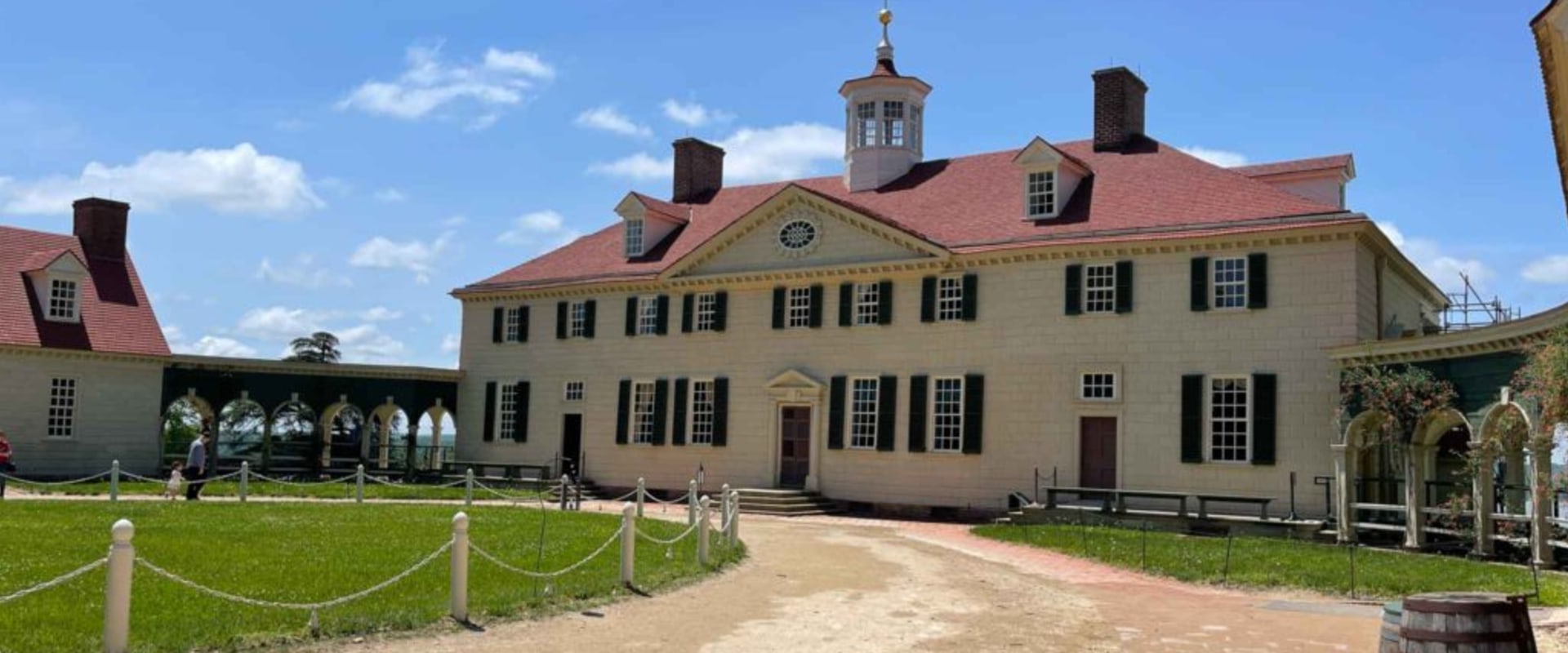
Mount Vernon, the iconic estate located on the banks of the Potomac River in Virginia, is not just a stunning example of 18th-century architecture; it is also a symbol of American history and heritage. As the plantation home of George Washington, the first President of the United States, Mount Vernon holds a unique place in the narrative of the nation’s founding. The estate, which spans over 500 acres, offers a glimpse into the life and times of Washington, showcasing his achievements as a leader and a landowner. The historical significance of Mount Vernon extends beyond its picturesque views and well-preserved buildings. It serves as a testament to the complexities of American history, including themes of slavery, agriculture, and the evolution of American society.
Visitors to Mount Vernon can explore not only Washington's life but also the lives of those who worked on the estate, providing a more comprehensive understanding of the era. As we delve deeper into the story of Mount Vernon, it is essential to highlight its last private owner, John Augustine Washington III. His stewardship marked a pivotal moment in the estate's history, bridging the gap between its origins and its eventual transition to public ownership. Understanding his role will enrich our appreciation for this historic site and its enduring legacy in American culture.
The Legacy of George Washington and Mount Vernon
George Washington's connection to Mount Vernon is deeply intertwined with his identity as a leader and a statesman. Acquired in 1754, the estate became a sanctuary for Washington, where he could retreat from the pressures of public life.Over the years, he expanded the property, transforming it into a thriving plantation that reflected his vision of agricultural innovation.Mount Vernon is not just a home; it is a symbol of American history. Washington's dedication to the estate is evident in his meticulous attention to its development. He implemented advanced farming techniques and diversified crops, which were revolutionary for the time. This commitment to agriculture was not only a personal passion but also a reflection of his belief in self-sufficiency and economic independence for the new nation.During his presidency, Washington often returned to Mount Vernon, using it as a place for reflection and rejuvenation.
The estate served as a backdrop for significant moments in his life, including his retirement from public service. In his will, he expressed a desire for Mount Vernon to remain in the family, underscoring its importance as a legacy.The history of Mount Vernon extends beyond Washington's lifetime. After his death in 1799, the estate faced challenges, including financial difficulties and the need for preservation. However, it has since become one of the most visited historic sites in the United States, attracting millions who seek to understand Washington's life and contributions.Today, Mount Vernon stands as a testament to Washington's enduring legacy.
It offers insights into his personal life and the values he championed—liberty, perseverance, and civic responsibility. The estate not only preserves the memory of George Washington but also serves as an educational resource that highlights the complexities of early American history.
The Transition from Private Ownership to Public Trust
The history of Mount Vernon, the iconic estate of George Washington, reflects a significant transition from private ownership to a public trust, marking a pivotal moment in American heritage preservation. The estate remained in the Washington family for generations after George Washington's death in 1799. His adopted son, George Washington Parke Custis, inherited the property and continued to maintain it as a family estate.However, by the mid-19th century, the financial burdens of maintaining Mount Vernon became overwhelming. In 1858, Custis's daughter, Mary Anna Custis Lee, faced mounting debts and was unable to sustain the estate.This led to a crucial decision: the estate was put up for sale. The looming threat of commercial development and neglect prompted a group of concerned citizens to take action.In 1860, the Mount Vernon Ladies' Association was formed, spearheaded by Ann Pamela Cunningham. This organization aimed to purchase Mount Vernon and preserve it as a memorial to George Washington. After extensive fundraising efforts, they successfully acquired the estate in 1868 for $200,000.
This marked a significant shift in ownership; Mount Vernon was no longer a private residence but rather a site dedicated to public education and historical preservation.The transition from private ownership to a public trust not only saved Mount Vernon from potential destruction but also established it as a model for historic preservation across the United States. Today, the estate is managed by the Mount Vernon Ladies' Association, which continues to uphold its mission of honoring Washington's legacy while providing educational resources to visitors.This transformation underscores the importance of community involvement in preserving national treasures and highlights how collective efforts can safeguard history for future generations.
Who Was the Last Private Owner of Mount Vernon?
The last private owner of Mount Vernon was John Augustine Washington III , a direct descendant of George Washington. Born in 1850, he was the great-grandnephew of the first President of the United States. John Augustine inherited Mount Vernon in 1858 after the death of his father, George Washington Parke Custis , who had been instrumental in preserving the estate.During his ownership, John Augustine faced numerous challenges, including financial difficulties and the burden of maintaining the historic estate.Despite these challenges, he made significant contributions to the preservation of Mount Vernon. He worked diligently to restore and maintain the property, ensuring that it remained a tribute to his illustrious ancestor.In 1868, recognizing the importance of Mount Vernon as a national treasure, John Augustine Washington III made a pivotal decision. He sold the estate to the Mount Vernon Ladies' Association , a group dedicated to preserving and protecting the site for future generations. This sale marked the end of private ownership and initiated a new chapter in Mount Vernon's history as a public museum.The Mount Vernon Ladies' Association has since played a crucial role in restoring and maintaining the estate, allowing millions of visitors to appreciate its historical significance.
John Augustine's foresight in selling Mount Vernon ensured that it would be preserved not just as a family legacy but as an essential part of American history.Today, Mount Vernon stands as a testament to George Washington's life and legacy, thanks in part to the efforts of its last private owner, John Augustine Washington III.
The Role of the Mount Vernon Ladies' Association
The Mount Vernon Ladies' Association (MVLA) was established in 1853, marking a pivotal moment in the preservation of George Washington's estate. This organization was formed by a group of women who recognized the importance of Mount Vernon not only as a historical site but also as a symbol of American heritage. Their mission was clear: to protect and maintain the estate for future generations.After the death of the last private owner, John Augustine Washington III, in 1852, Mount Vernon faced the threat of deterioration and potential sale. The MVLA stepped in to ensure that this iconic estate would not fall into disrepair or be lost to commercial interests.Through tireless fundraising efforts, they successfully acquired the estate in 1858, making it one of the first historic preservation efforts in the United States.The role of the MVLA has evolved over the years, but their commitment to preservation remains steadfast. They have undertaken numerous restoration projects to maintain the estate's historical integrity, including:
- Restoration of the Mansion: The MVLA has overseen extensive renovations to preserve the mansion's original architecture and furnishings.
- Landscaping and Gardens: Efforts have been made to restore the gardens to their 18th-century appearance, reflecting Washington's vision for his estate.
- Educational Programs: The association has developed programs that educate visitors about Washington's life and legacy, ensuring that his contributions are remembered.
Impact of the Last Private Owner on Mount Vernon's Legacy
The last private owner of Mount Vernon, John Augustine Washington III, played a pivotal role in shaping the estate's legacy and its preservation for future generations.His stewardship during the mid-20th century came at a time when the historical significance of Mount Vernon was increasingly recognized, yet it faced numerous challenges, including financial constraints and the threat of urban development.One of Washington III's most significant contributions was his commitment to maintaining the estate's integrity. He undertook extensive restoration projects that not only preserved the physical structure of the mansion but also aimed to keep alive the historical narrative associated with George Washington. This included careful attention to period-appropriate furnishings and landscaping, which helped to create an authentic representation of 18th-century life.Moreover, Washington III's decision to open Mount Vernon to the public marked a turning point in its history. By allowing visitors to explore the estate, he fostered a deeper appreciation for George Washington's legacy and the values he embodied.
This move not only increased public interest but also generated essential funds for ongoing maintenance and preservation efforts.In addition to physical preservation, Washington III's ownership highlighted the importance of private stewardship in historical conservation. His actions set a precedent for how private individuals can play a crucial role in protecting national treasures. The establishment of the Mount Vernon Ladies' Association in 1853, which he supported, further solidified this legacy by ensuring that Mount Vernon would be preserved as a historic site rather than succumb to commercial development.Ultimately, John Augustine Washington III's impact on Mount Vernon's legacy is profound. His dedication to preservation and public engagement not only safeguarded the estate but also transformed it into a symbol of American heritage.
Today, Mount Vernon stands as a testament to his vision and commitment, reminding us of the importance of preserving our history for future generations.
Frequently Asked Questions About Mount Vernon Ownership
Mount Vernon, the historic estate of George Washington, has a rich ownership history that often raises questions among visitors and history enthusiasts. Here are some frequently asked questions regarding its ownership:- Who was the last private owner of Mount Vernon? The last private owner of Mount Vernon was John Augustine Washington III, a descendant of George Washington. He inherited the estate in 1858 but faced financial difficulties, leading to its eventual sale.
- When did Mount Vernon become a public site? In 1858, after John Augustine Washington III's financial struggles, the estate was sold to the Mount Vernon Ladies' Association, which has since maintained it as a historic site open to the public.
- What is the significance of the Mount Vernon Ladies' Association? The Mount Vernon Ladies' Association was established in 1853 to preserve and protect Mount Vernon. It was the first national historic preservation organization in the United States.
- How has ownership changed over time? Ownership of Mount Vernon transitioned from George Washington to his heirs and then to private individuals before being acquired by a non-profit organization dedicated to its preservation.
Visitors today can explore the estate and learn about its storied past, ensuring that George Washington's legacy endures.
Conclusion: The Enduring Legacy of Mount Vernon
In conclusion, understanding who the last private owner of Mount Vernon was provides valuable insight into the preservation and legacy of this iconic estate. The final private owner, John Augustine Washington III, played a crucial role in maintaining the estate's historical integrity during a time when many such sites faced neglect or destruction.The stewardship of Mount Vernon by Washington III ensured that the estate remained a symbol of American heritage. His efforts to preserve the property not only honored his ancestor, George Washington, but also laid the groundwork for its eventual transition to public ownership. This transition was pivotal in allowing millions of visitors to experience the rich history and significance of Mount Vernon.Moreover, the legacy of Mount Vernon extends beyond its physical structure; it embodies the values and ideals that George Washington championed.The estate serves as a reminder of the nation's founding principles and the importance of preserving history for future generations.
- Preservation Efforts: John Augustine Washington III's commitment to maintaining Mount Vernon highlights the importance of individual responsibility in heritage conservation.
- Public Access: The transition from private to public ownership has allowed for educational programs and resources that continue to inform and inspire.
- Cultural Significance: Mount Vernon stands as a testament to American history, reflecting the life and legacy of one of the nation’s most revered figures.